
Camel Spiders.
The largest, most bad-ass arachnids that have ever been discovered.
Known for their bite which can render a camel unconscious in 20 minutes and dead in 45*, these spiders are often the most talked-about creatures in everyday conversation and, indeed, the internet.
*we said know for, not that it is true...

The Urban Legends of War - Poisonous or Venomous?
During the various US war campaigns in Iraq, stories circulated that 17 U.S. soldiers had died as a result of camel spiders. Thus it is true, according to legend, that the venom of a camel spider is deadly to human beings.
Rumors also persist that Camel spiders can jump 3 feet in the air and use this skill to jump on the backs of their prey, or even run as fast as a Humvee.

Global Notoriety: The "Deer Killers"
The Middle East isn't the only place where solifugids spiders have a bad name. In Mexico, they're known as matevenados, which translates as "deer killers."
Local folklore suggests that the Mexican government offers a 500 peso reward for every live deer killer spider presented to the National Spider Laboratory.
The spiders are supposedly milked for their venom which is used to treat victims of spider bites (if they survived!). While this adds to the creature's mystique, it highlights just how widespread the fear of these arachnids truly is.
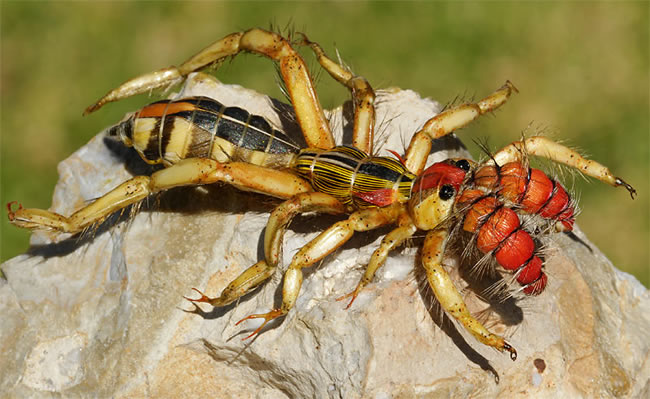
The Reality Check: Debunking the Myths of Camel Spiders
Actually the truth is rather different.
A number of urban legends have bounded across the internet that exaggerate the size and speed of Solifugae, and their potential danger to camels, humans, and soldiers in Iraq. That's right, their talents and size are all myth!

Most species live in deserts and feed opportunistically on ground-dwelling arthropods. No records exist of a camel spider ever eating or killing a camel!
Camel Spider FAQ - Bites and Myths
Fun Facts & Myth-Busting
- Super Speed? While they can't run 25 MPH as legends claim, they are fast for their size, capable of reaching speeds up to 10 MPH (16 km/h). Their name "wind scorpion" comes from this agility.
- Eating Habits: They are voracious eaters. While they don't eat camels, they will eat insects, lizards, small birds, and rodents. They liquefy their prey with digestive fluids before ingesting.
- The Name: The term Solifugae derives from Latin, meaning "those that flee from the sun."
- Jaw Strength: Relative to their size, they have some of the largest jaws in the animal kingdom. Their chelicerae can be up to one-third of their body length!


